
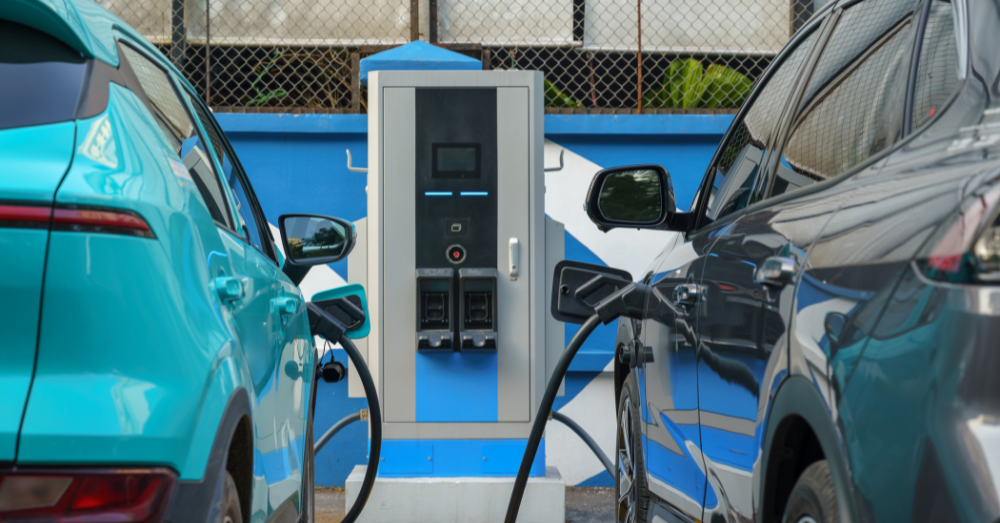
Buying your first electric vehicle feels like stepping into the future. But the choice involves understanding your daily driving patterns, planning your home charging setup, and knowing what maintenance changes to expect. First-time EV buyers need practical information before committing. Once you understand the basics, the transition becomes far less intimidating.
- Home charging installation costs between $800 and $2,500 for most homeowners, depending on your electrical setup.
- Electric vehicles require about 50% less maintenance than gas cars, saving thousands over their lifetime.
- Most EV owners charge at home overnight and rarely need public charging stations for daily driving.
Your Home Charging Setup Comes First
Here’s something nobody mentions upfront. How you charge at home will make or break your EV experience. Every new electric vehicle comes with a Level 1 charger that plugs into any standard 120-volt outlet. It takes almost four days to fully charge your battery this way.
Level 2 chargers are what most EV owners use. These require a 240-volt outlet and can fully charge your vehicle in a few hours. You’ll probably need an electrician to install one. Most homeowners spend around $800 to $2,500 for the complete setup.
Many utility companies offer rebates that can cut costs in half. There’s also a federal tax credit covering 30% of equipment and installation, up to $1,000.
Range Works Better Than Expected
Everyone worries about running out of juice. The reality? Most Americans drive less than 40 miles per day. Even the cheapest EVs get at least 150 miles per charge.
Take an affordable option like the Chevrolet Bolt EV, Centerville, OH shoppers can find at local dealerships. It offers around 250 miles of range, handling most people’s weekly driving without needing to charge every night.
Road trips are doable too. Public charging networks have expanded dramatically. A DC fast charger can add 100 miles in about 30 minutes.
Maintenance Gets Way Simpler
Here’s where EVs make your life easier. You can forget about oil changes every 3,000 miles. Transmission fluid? Gone. Spark plugs? Don’t exist. Electric motors have fewer moving parts.
Studies show EV owners spend about $4,600 on maintenance over the vehicle’s lifetime, compared to $9,200 for gas cars. For the first three years, EVs average just $77 in maintenance costs, while gas cars rack up $228.
You’ll still need tire rotations and cabin air filter changes. Brake pads last longer thanks to regenerative braking. Some EV owners go 100,000 miles before needing new brake pads.
Federal Tax Credits Are Ending Soon
If you’re reading this before September 30, 2025, you need to move fast. The federal government offers up to $7,500 in tax credits for new EVs and up to $4,000 for used ones.
The car must be assembled in North America, and its battery has to meet certain requirements. There are income limits and price caps. New EVs can’t cost more than $55,000 for cars or $80,000 for SUVs to qualify.
Your Electricity Bill Goes Up, Gas Bill Disappears
Charging at home will add about $25 to $35 monthly if you’re driving 30 miles per day. That’s roughly $300 to $420 per year.
Compare that to gas. Driving 15,000 miles annually in a gas car costs about $1,300 in fuel alone. Even with the higher electric bill, you’re saving around $900 yearly. Many utility companies offer special rates for EV owners who charge during off-peak hours.
Cold Weather Affects Battery Performance
If you live somewhere with harsh winters, cold temperatures will affect battery performance. Your range can drop by 20% to 40% when it’s freezing.
Does this make EVs impractical in cold climates? Actually, they work fine if you account for it. If your daily commute is 40 miles and your EV has 250 miles of range, losing 30% still leaves you with 175 miles.
Getting Started With Your Purchase
An EV works great for some people but might not fit your lifestyle yet. If you regularly drive 300 miles daily or live in an apartment without charging access, a hybrid might fit better.
For most people, though, an EV handles daily needs without breaking a sweat. The key is being honest about your driving patterns. If you have a place to charge at home and your daily commute is under 100 miles, you’re probably a good candidate.
Test drive a few models before you decide anything. Pay attention to how the regenerative braking feels and whether the seats are comfortable. Talk to other EV owners in your area. Real-world feedback beats manufacturer marketing every time.
Start by calculating your potential savings. Add up what you spend on gas and maintenance yearly, then compare that to estimated electricity costs. Factor in available tax credits and rebates. The math usually works out better than expected.

This post may contain affiliate links. Meaning a commission is given should you decide to make a purchase through these links, at no cost to you. All products shown are researched and tested to give an accurate review for you.