
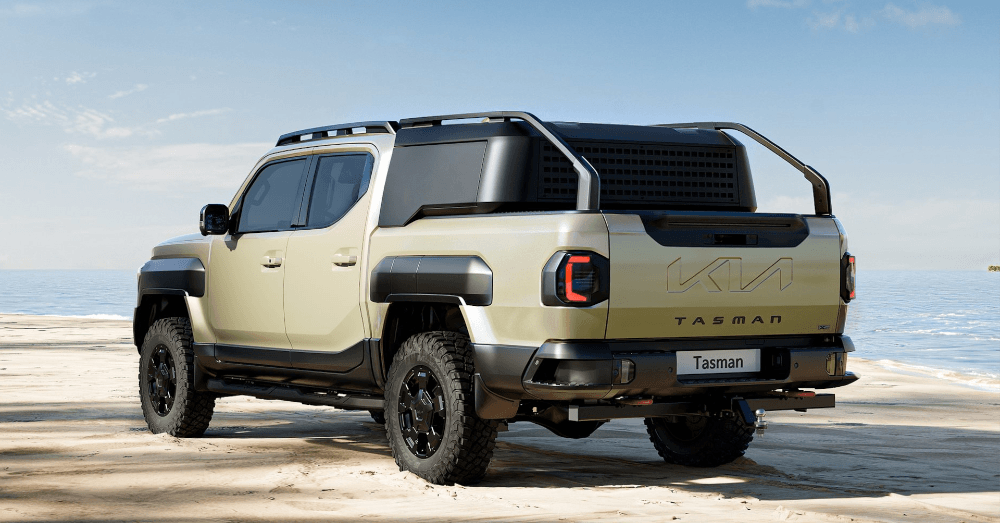
Kia just dropped a bombshell at its 2026 CEO Investor Day in Seoul. The Korean automaker confirmed that a midsize pickup truck with hybrid and extended-range electric powertrains will arrive in the United States before the end of the decade. It’s a bold play into one of America’s most profitable and fiercely competitive vehicle segments, and it shows that Kia isn’t done shaking up the market.
- Kia plans to launch a body-on-frame pickup truck with hybrid and extended-range electric variants by 2030.
- The company expects to sell 90,000 pickups a year in North America and claim 7% of the midsize pickup segment by 2034.
- The truck will compete against the Toyota Tacoma, Ford Ranger, and GM’s Chevrolet Colorado and GMC Canyon.
A Truck Built on a Real Truck Platform
If you were worried Kia might try something quirky like a unibody truck (looking at you, Hyundai Santa Cruz), rest easy. The body-on-frame design separates the cab from the cargo bed, providing better towing and hauling capability. That’s the same architecture used by every serious midsize truck on the market today, from the Tacoma to the Colorado.
At least one hybrid variant is expected to be produced in the U.S. That detail matters a lot. Due to the infamous Chicken Tax that puts a 25% tariff on foreign-built pickups, expect Kia to build the pickup in North America. Local production gives the automaker a chance to design the truck with this market in mind.
Two Electrified Powertrains, Zero Diesel
The company will offer the pickup with a traditional hybrid powertrain and an EREV configuration, a series hybrid where a gasoline engine charges the battery but never directly drives the wheels. That EREV setup is interesting because it gives buyers the smooth, quiet feel of an electric truck while eliminating range anxiety on long hauls or during heavy towing.
Kia CEO Ho Sung Song says the pickup will offer buyers the choice of both hybrid and range-extender electric powertrains. This positions Kia’s truck against traditional gas-powered rivals and newer electric entrants like the Rivian R1T at the same time. It’s a wide net to cast, and it could attract buyers who want efficiency without giving up their weekend towing trips.
For reference, the existing Kia Tasman sold overseas currently offers a turbocharged 2.5-liter four-cylinder making 277 horsepower and 310 pound-feet of torque. The pickups can tow up to 7,716 pounds and have a payload of up to 2,634 pounds. While the U.S. version won’t be a carbon copy of the Tasman, those numbers give you a sense of what Kia is capable of building.
Ambitious Sales Goals in a Crowded Field
Selling a pickup truck in America isn’t easy, especially when you’ve never done it before. This will mark the first time Kia has ever offered a pickup in America, a segment that has historically been dominated by domestic and Japanese brands.
According to Automotive News, Kia projects annual sales of 90,000 pickups in North America, aiming to secure 7% of the midsize pickup segment by 2034. That’s ambitious, but it’s also measured. The Toyota Tacoma, for example, shifted over 274,000 units last year. So Kia isn’t trying to overthrow the king. It’s looking to carve out a real, lasting share of the market.
This pickup is part of a bigger picture, too. Kia is targeting 1.02 million U.S. vehicle sales by 2030, up from about 850,000 last year. That would push its market share from roughly 5% to 6.2%. To get there, it’s doubling down on hybrids, expanding from four to eight nameplates and adding electrified options to core models.
Not Quite the Tasman, But Related
Kia last year entered the global pickup truck market with a vehicle called Tasman. It’s already on sale in Australia, New Zealand, South Africa, and the Middle East. But the model intended for the U.S. will be a distinct offering built for American consumers.
Underneath, it will share its rugged bones with a future Hyundai truck previewed by the Boulder SUV concept unveiled at the New York Auto Show. So expect Kia’s midsize hybrid pickup and Hyundai’s upcoming truck to share a platform, much like the Telluride and Palisade do today. Same bones, different personality.
Expect solid towing, genuine off-road chops, and a roomy double-cab layout designed for real world use. Kia has already proven it knows how to build truck interiors with tech that rivals luxury brands, and its existing Tasman features a panoramic digital display, driver-assist systems, and even a Harman Kardon sound system in higher trims.
Can Kia Actually Pull This Off?
Truck buyers are some of the most brand-loyal shoppers in the auto world. Breaking into this segment is tough, and plenty of brands have tried and failed. But Kia’s position in 2026 is a lot different from where it was a decade ago. The company builds the Telluride, one of America’s best-selling three-row SUVs. The EV6 won World Car of the Year. And Kia’s warranty coverage still outpaces nearly every competitor in the business.
Kia and Hyundai are both far more respected in the U.S. than they were just two short decades ago. A well-priced, well-built Kia midsize pickup truck with hybrid and EREV options could turn a lot of heads at dealerships, especially as fuel costs and environmental concerns continue shaping buying decisions.
We’ll likely see a lot more details in the next couple of years. But for now, Kia has put the Tacoma, Ranger, and Colorado squarely in its crosshairs, and it’s bringing electrified firepower to the fight.
This post may contain affiliate links. Meaning a commission is given should you decide to make a purchase through these links, at no cost to you. All products shown are researched and tested to give an accurate review for you.


